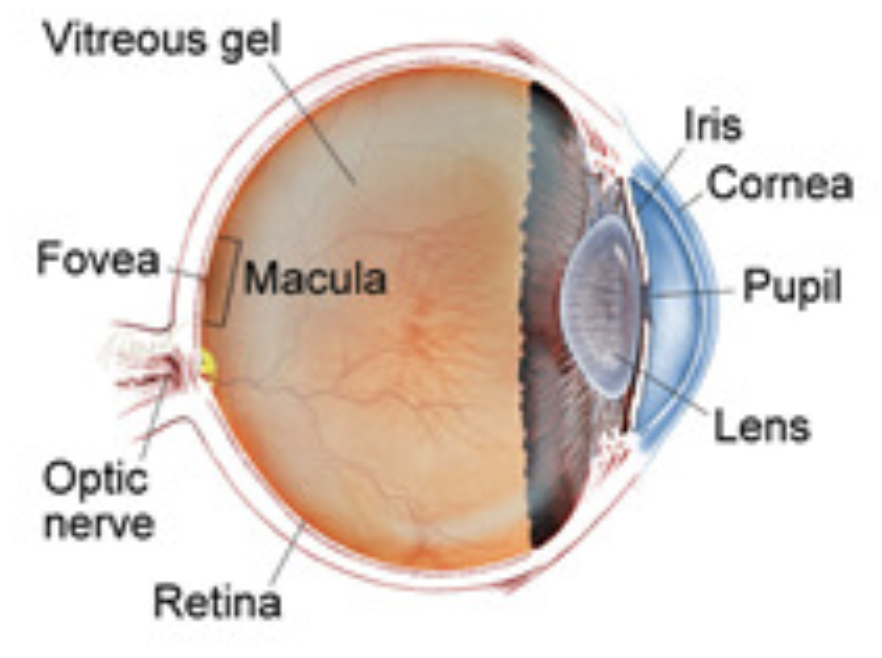
A specialized branch of ophthalmology that focuses on the medical and surgical treatment of retina, vitreous (jelly like inside eyeball) and macula ( eye central vision)
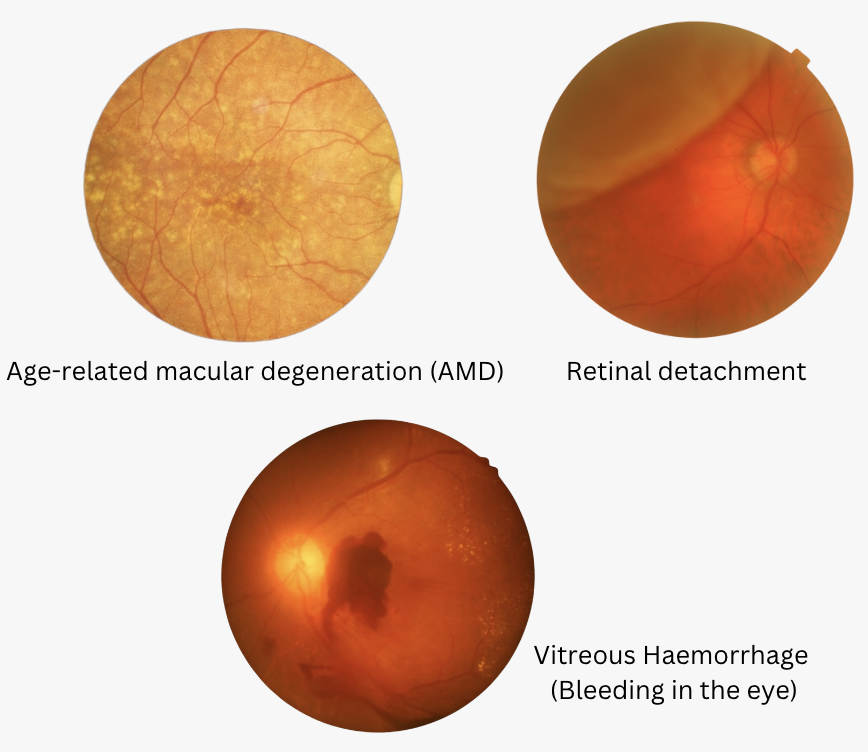
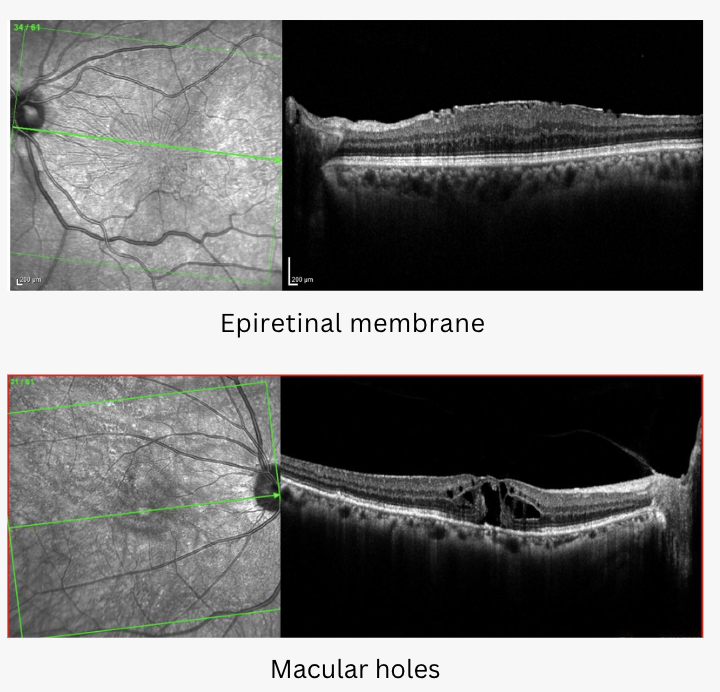
This field addresses a wide range of issues behind the eyes, including Age-related macular degeneration (AMD), Retinal detachment, Epiretinal membrane, Macular holes, infection, Intraocular foreign body and trauma.
Vitreoretinal surgeons are trained to perform a procedure of laser therapy, cryotherapy, retinal detachment surgery, and vitrectomy (removal of the vitreous)
Which Condition Can We Treat?
What is Retinal Detachment?
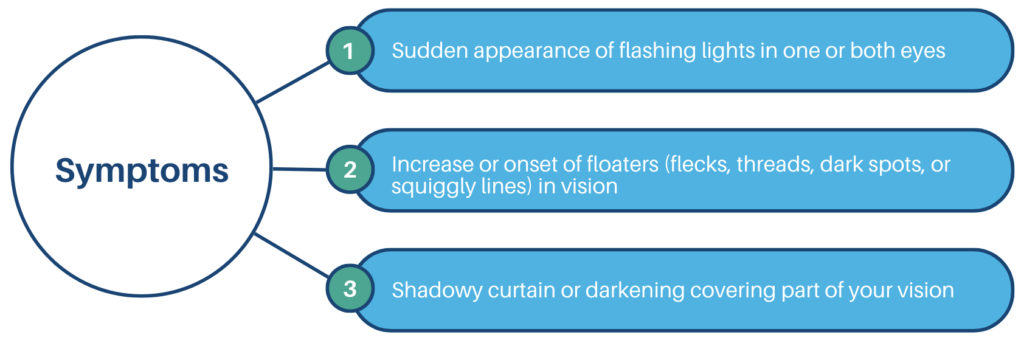
Retinal detachment is a serious eye condition in which the retina, a layer of tissue at the back of the eye, pulls away from its normal position. This can lead to a sudden and severe loss of vision and requires immediate medical attention.
If you experience these symptoms, it’s crucial to consult an ophthalmologist immediately to prevent potential vision loss. Timely diagnosis and treatment can greatly improve the chances of restoring vision and preventing further complications
What are the Treatment for Retinal Detachment?
Retinal detachment is a medical emergency and requires immediate attention from a trained retinal surgeon
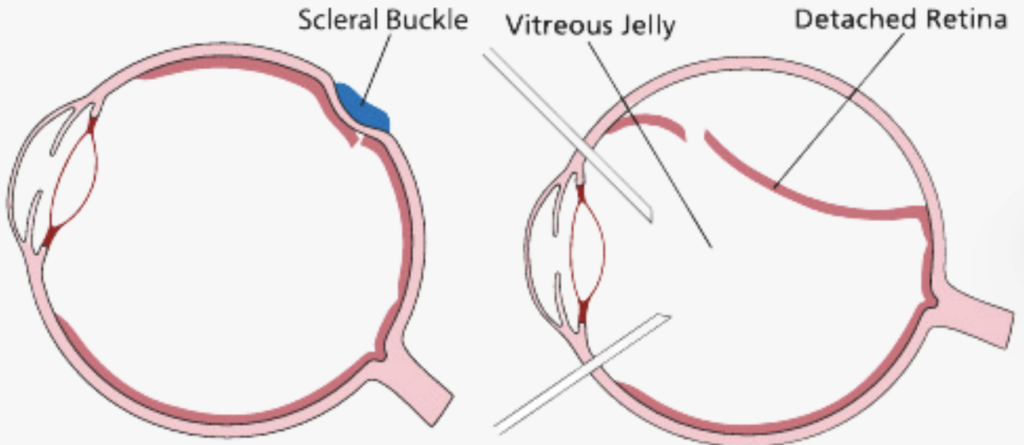
Vitrectomy Surgery
Performed to remove the vitreous gel from the eye with 3 tiny incisions.
Laser burns are applied to seal retinal holes.
Special gas or silicone oil is inserted to prevent re-detachment.
Modern vitrectomy is suture-less, allowing for faster recovery and less post-op pain.
Wide-angled viewing systems enhance visualization during surgery.
Scleral Buckle Surgery
A piece of silicone (scleral buckle) is sutured to the outside of the eye.
The retinal hole is treated with cryotherapy (freezing treatment).
The buckle presses the eye inward to help close the retinal hole.
The buckle usually isn’t removed and it’s not visible after surgery.
This procedure, known as "Cryo-buckle," can be combined with vitrectomy for complex cases.
Pneumatic Retinopexy
Suitable for a few selected cases
It combines cryotherapy (freezing the retinal tear) with injection of a gas bubble, without removal of the vitreous or use of a scleral buckle.
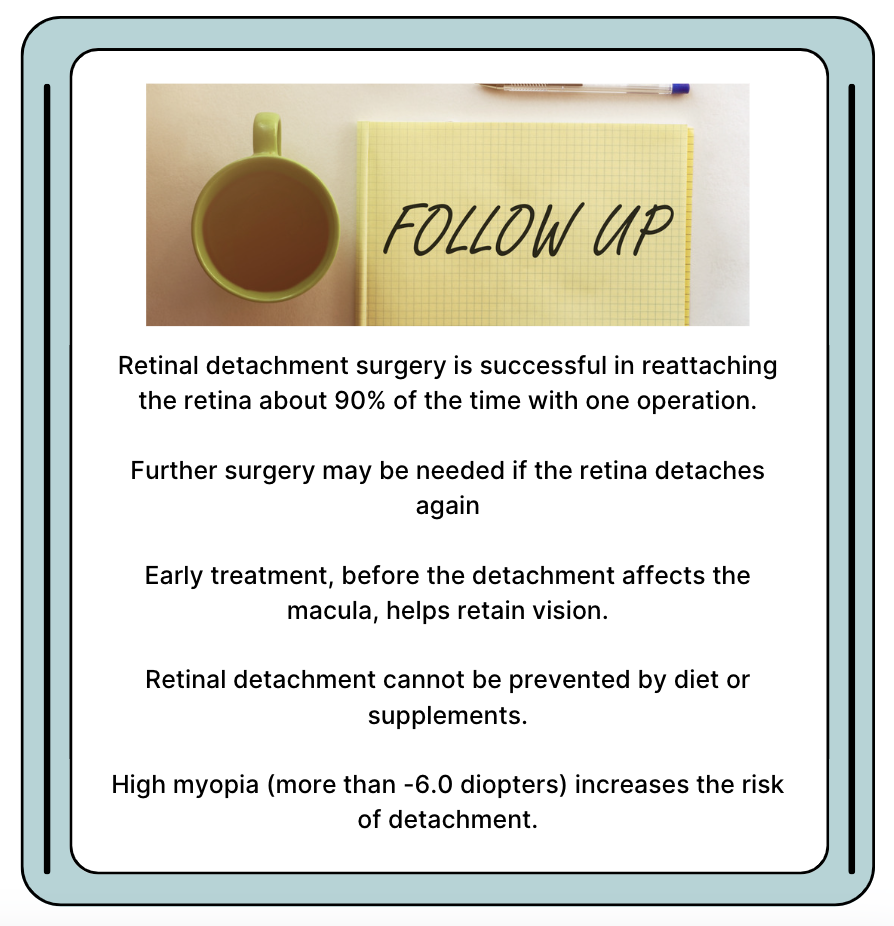
What to Expect After Surgery?
Patients may need to maintain a face-down posture to allow the gas bubble to contact the retina.
The gas bubble typically dissolves on its own within a month.
Avoid air travel if gas is present in the eye, as altitude can increase pressure.
Silicone oil, if used, requires removal in a second operation after 6 months.
Take the first step towards better eye health today!
Book your appointment now ! Your Trusted Eye Specialist Centre.